Retaining Wall Repair in Tustin, California
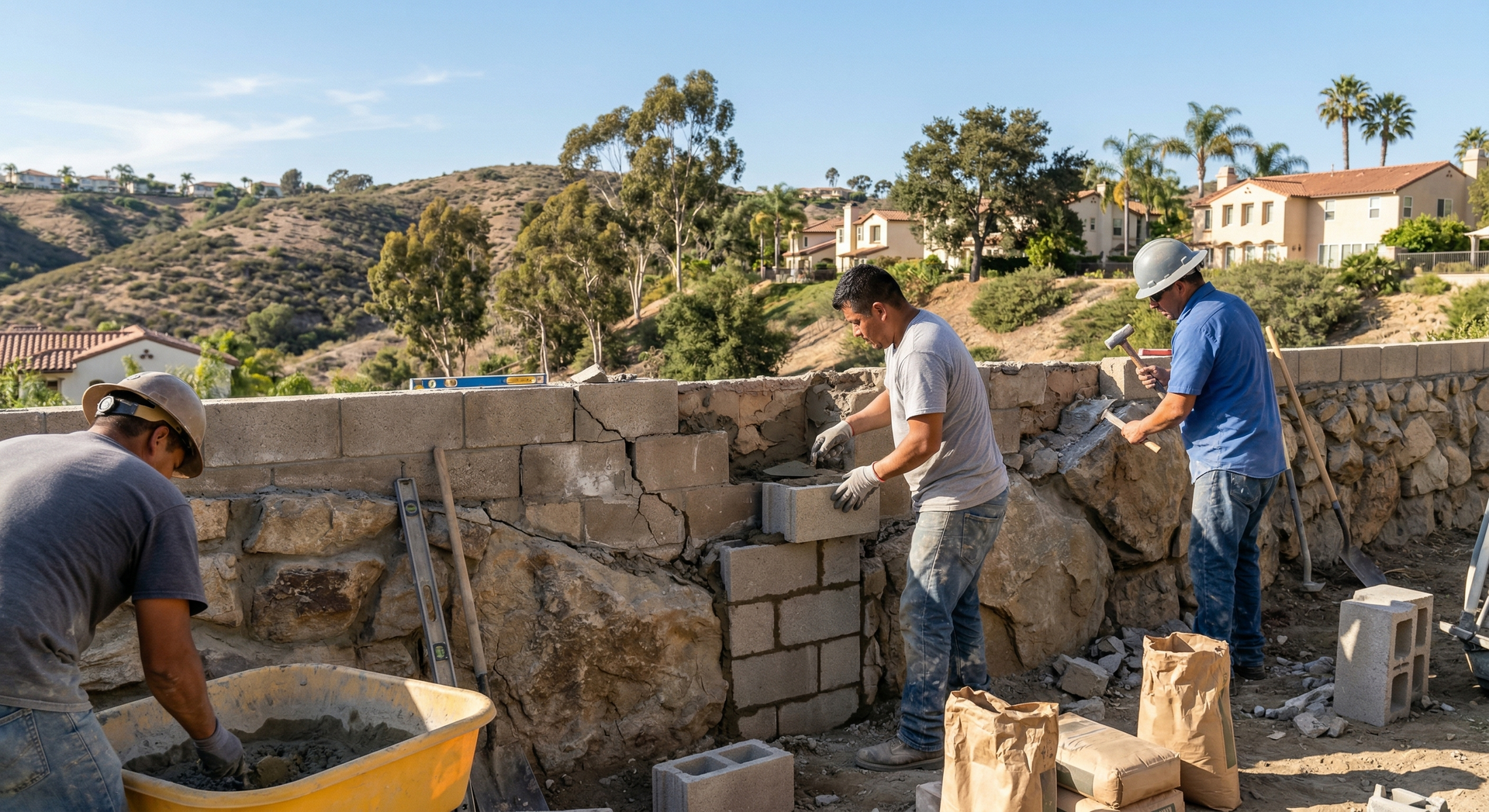
We provide retaining wall repair in Tustin, CA for homeowners whose support structures are leaning, cracking, bulging, settling, or letting soil shift out of place. At Tustin Block Wall & Retaining Walls, we repair residential retaining walls that have lost strength from age, trapped water, worn footing, or soil movement, so your yard stays safer, more stable, and easier to use.
A retaining wall does a bigger job than most people think. It does not just edge a slope. It holds back soil, protects flat yard space, helps control drainage, and keeps pressure off patios, walkways, driveways, and fences nearby. Look, once that system starts to move, the whole area around it can start acting off. Soil creeps forward. Water starts pooling. Hardscape shifts. Gates stop lining up. It can feel small at first, then not small at all.

Contact Us
What We Cover:
- Segmental Retaining Walls
- Concrete Block Walls
- Cinder Block Privacy Walls
- Garden & Decorative Walls
- Hillside & Slope Stabilization
- Design & Permit Consultation
- What Retaining Wall Repair Involves
- Signs Your Retaining Wall Needs Repair
- Why Retaining Walls Fail in the First Place
- Why Fast Repair Matters
- What Affects Retaining Wall Repair Costs
What Retaining Wall Repair Involves
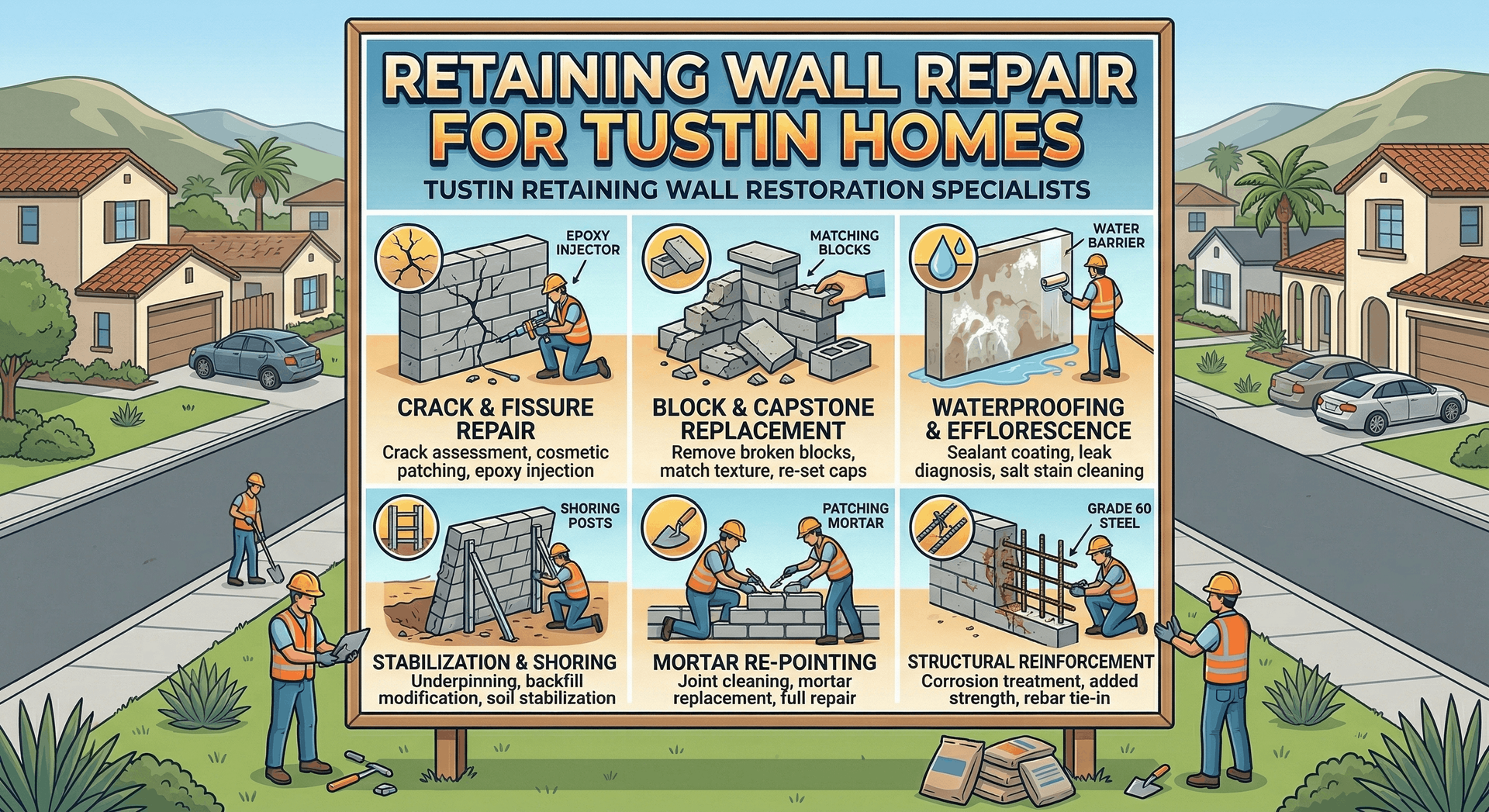
Retaining wall repair means we fix the masonry support system so it can do its job again. That can include rebuilding failed sections, correcting a lean, replacing broken blocks, reinforcing weak areas, improving drainage behind the wall, repairing footing trouble, resetting caps, and cleaning up the grade around the soil-holding structure so water stops pushing against it the wrong way. Each repair has to match the wall’s real problem. A surface patch on a wall with deep pressure behind it won’t last.
Here’s the thing: a retaining wall works like a shelf holding back a heavy row of books. Once pressure builds on one weak point, the whole line starts to show stress. You may see one crack. The slope support feels more damage than that.
Some perimeters need a focused repair in one area. Some need partial rebuilding. Some need drainage work first, then wall repair. We inspect the surface, the slope, the soil line, and the way water moves through the yard. That tells us what failed and what needs to change so the same problem does not come right back.
Signs Your Retaining Wall Needs Repair
Most failing retaining walls give warnings. Homeowners often notice stair-step cracks, a bow in the middle, blocks that have shifted out of line, loose caps, soil washing through joints, or a masonry barrier that looks like it leans a little more every few months. You may see standing water near the base after rain or irrigation. You may hear that hollow sound from loose sections. You may even spot a patio or walkway next to the wall starting to dip.
Honestly, most structures failures do not start with a dramatic collapse.
They start with movement.
Last week, we looked at a structure in a Tustin backyard that had one visible crack near the corner. That crack was not the whole story. Water had been sitting behind the perimeter for months from a slow sprinkler leak, and the pressure had already started pushing the middle run forward. From the patio, it looked minor. From the side, you could see the line was off. That is the kind of job where a quick patch just wastes time.
Why Retaining Walls Fail in the First Place
What pushes a soil-holding structureout of shape? In most yards, trapped water does. Soil gets wet. Wet soil gets heavy. Pressure builds behind the grade-support structure and looks for the weakest point. That weak point may be a crack, a drain issue, a poor base, a weak joint, or a section that was not built for the load it now carries.
Tustin homes deal with a mix of flat lots, raised planters, sloped side yards, and older walls that have seen years of irrigation, heat, and winter rain. That mix matters. An enclsosure can look fine through long dry stretches, then shift after a wet spell (or after one hidden drain line starts leaking). Roots add trouble too. So does poor grading. So does soil that expands and shrinks through the year. A wall that never had enough reinforcement will usually show it in time.
Can a retaining wall fail from age alone? Yes, age plays a part, though age is usually not the only part. Old mortar breaks down. Materials wear. Small drainage flaws get worse. The pressure keeps working every day. No slope support gets a day off.
Why Fast Repair Matters
A damaged retaining wall rarely stays in the same condition for long. Once it starts leaning or cracking, the force behind it keeps working. That means the repair tends to get larger, more invasive, and more costly the longer it sits. That is true even for a perimeter that still looks “mostly okay” from the yard.
Small delay. Bigger repair.
A failing retaining wall can affect more than the materials itself. It can put stress on nearby flatwork, stairs, fences, planting beds, and yard drainage. On some properties, it cuts into usable space. On others, it turns a clean slope into a muddy mess after every rain. Repairing the enclosure early gives you a better chance of saving more of the existing structure and avoiding a full rebuild.
What Affects Retaining Wall Repair Costs
Repair cost depends on the size of the divider, the type of masonry system, the amount of movement, the condition of the footing, access to the site, and the drainage work needed behind it. A short planter wall with one failed corner is one kind of repair. A tall retaining wall with a long lean, soaked backfill, broken drains, and soil pressure across the full run is a very different job.
Material matters too. Block walls, stone walls, concrete retaining walls, and older masonry walls do not repair the same way. Site access changes labor in a big way. Tight side yards, raised back lots, pools nearby, and limited equipment access can change the plan fast. Repair work often costs more than homeowners expect for one simple reason: we are not just treating the visible crack. We are fixing the cause under and behind the system.
Does a small crack mean the structure needs major work? No, not every time.
A single hairline crack may stay cosmetic. A crack paired with bulging, lean, water stains, soil loss, or movement near the base points to structural trouble. We look at the full picture, not one mark in isolation.
FAQs About Retaining Wall Repair in Orange County
Can a leaning retaining wall be repaired?
Yes, many leaning retaining structures can be repaired, though the answer depends on how far the masonry divider has moved and what caused it. A minor lean with limited damage often allows for partial rebuilding or reinforcement. A severe lean across the full structure usually points to deeper failure.
What causes retaining wall cracks in Southern California?
Most cracks come from pressure behind the support. Water buildup, heavy soil, weak drainage, footing problems, root pressure, and age all play a part. The crack is often the warning sign, not the root issue.
Can you repair part of a retaining wall, or does the whole wall need work?
Many structures only need partial repair. We look at the failed area, the sections next to it, and the condition of the full run. If the trouble is isolated, we can focus the work there. If the barrier shows broad movement, we will tell you that right away.
How do I know if my wall is unsafe?
A soil-holding structure with obvious lean, bulging, deep cracks, loose sections, or soil loss should be inspected soon. Trouble near stairs, patios, walkways, or driveways deserves extra attention. If the installation looks like it has moved, it has.
Get Your Retaining Wall Looked at Before the Damage Spreads
A damaged soil-holding structure rarely fixes itself, and waiting usually gives the pressure more time to win. We repair retaining walls for homeowners who want the wall stable again, the yard usable again, and the stress off their plate. Contact us today at (657) 553-3314 for retaining wall repair in Southern California.
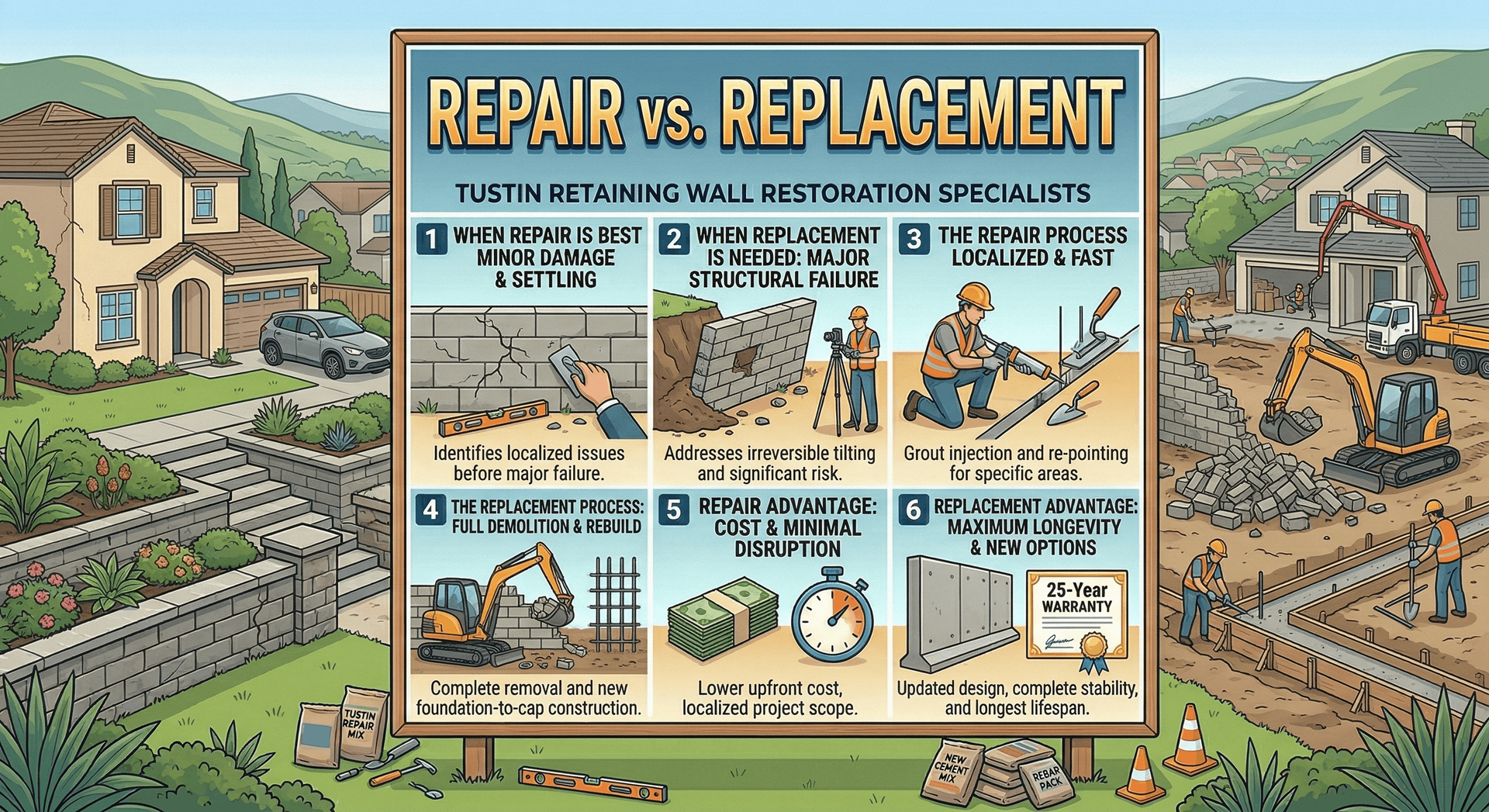
Repair vs Replacement
Some masonry support systems are strong candidates for repair. These are grade-support structures with limited damage, isolated movement, or drainage trouble that has not destroyed the whole structure. In those cases, a targeted repair can restore strength and stop the wall from drifting further.
Other dividers are too far gone for a lasting repair. That happens once the lean is broad, the base has failed, large sections have broken apart, or the original installation was never built for the pressure it faces now. In that case, replacement makes more sense than pouring money into repeated patchwork. We give straight guidance on that point. We do not dress up a rebuild and call it a repair.
Why Skilled Retaining Wall Repair Matters
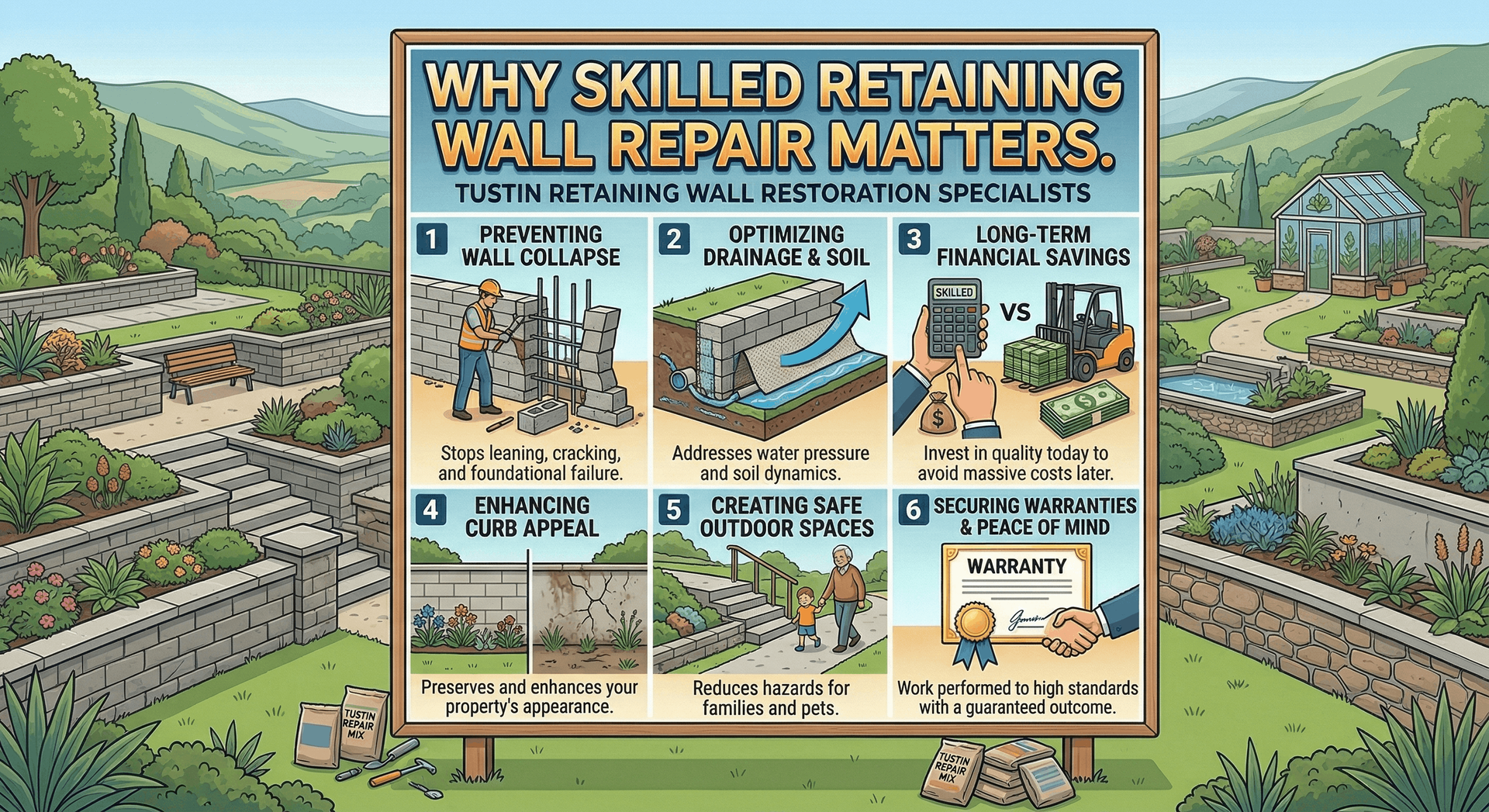
Retaining wall repair is not cosmetic masonry. It is structural work tied to soil, drainage, load, and grade. The visible masonry support system is only part of the system. The hidden part matters just as much, sometimes more. That is why repair has to start with the cause. Water pressure, footing issues, root pressure, poor backfill, blocked drains, and weak reinforcement all need the right fix.
Look, you can smear mortar into a crack in one afternoon. That is easy. Holding back wet soil year after year is the hard part. That is why we take time to assess the construction, the slope, and the water path first. A clean-looking repair that ignores the pressure behind the enclosure is like repainting a door that won’t latch. It looks better. It still fails.
Retaining Wall Repair for Tustin Homes
Tustin properties have their own quirks. Some homes have older yard walls that were built many years ago and have seen long-term wear. Some have raised planters that stay wet from irrigation. Some have slopes near patios, side yards, or pool areas where every inch of usable space counts. Repair work has to fit the property, not just the damaged section.
We keep that local context in mind on every job. A grade-support structure near a tidy backyard entertaining area needs a different finish standard than a utility wall tucked along a side slope. A front yard masonry support system has to hold soil and look right from the street. A backyard enclosure may need better drainage access and cleaner tie-in work with fencing or steps. Those details matter more than people expect (and they are the first things you notice later).
Built for Tustin Properties
Tustin homes aren’t all the same. Some lots are older and tighter. Some sit in newer planned areas with cleaner lines and HOA expectations. Some yards need a support structure that feels soft enough for a front entry, and some need a firm perimeter line for privacy and security. We build with those differences in mind. A wall near Old Town won’t always read the same as one near Tustin Ranch or close to Irvine edges, and that’s okay. The wall should fit the house, the street, and the way the yard gets used.
We pay attention to the details people live with every day. Gate spacing. Trash can screening. Sight lines from windows. The way a wall changes the feel of a patio. The way a side-yard wall affects airflow and access. Those details aren’t filler. They’re the stuff that makes the finished job feel right once you’re the one walking past it every morning.
Our Block Wall Installation Process
We start by looking at the property and the goal. Some owners want full privacy. Some need a property line wall that replaces a failing one. Some want a front wall with a more finished look. We talk through use, placement, finish, and any problem areas first. Then we map out the wall line, prep the site, install the footing work, set the block, reinforce the structure, and finish the construction to match the job.
We keep the process clear. We don’t bury you in trade talk. We explain what matters, what the divider needs, and what to expect at each stage. That part matters. Homeowners deserve to know what’s happening on their property and why.
Get a Block Wall that Feels Solid From Day One
Blockwork should do its job quietly. It should look clean, stand straight, and make the property feel more private, more secure, and more complete. That’s what we build. If you’re planning block wall installation in Tustin, CA, contact us and let’s talk about the kind of wall your property actually needs.
Ready to fix your deteriorating wall into a brand new structure? Call (657) 553-3314 for a fast, free estimate.